
In the investment world, compounding returns is the goal.
The power of compounding is simple: small gains accumulate over time, creating outcomes that far exceed the sum of their individual parts.
But not all compounding is the same.
And in the case of artificial intelligence, compounding could change everything.
Most discussions about AI focus on familiar questions:
Will AI replace jobs?
Will AI make workers more productive?
Will AI disrupt specific industries?
These are important questions. But they may not be the most important questions.
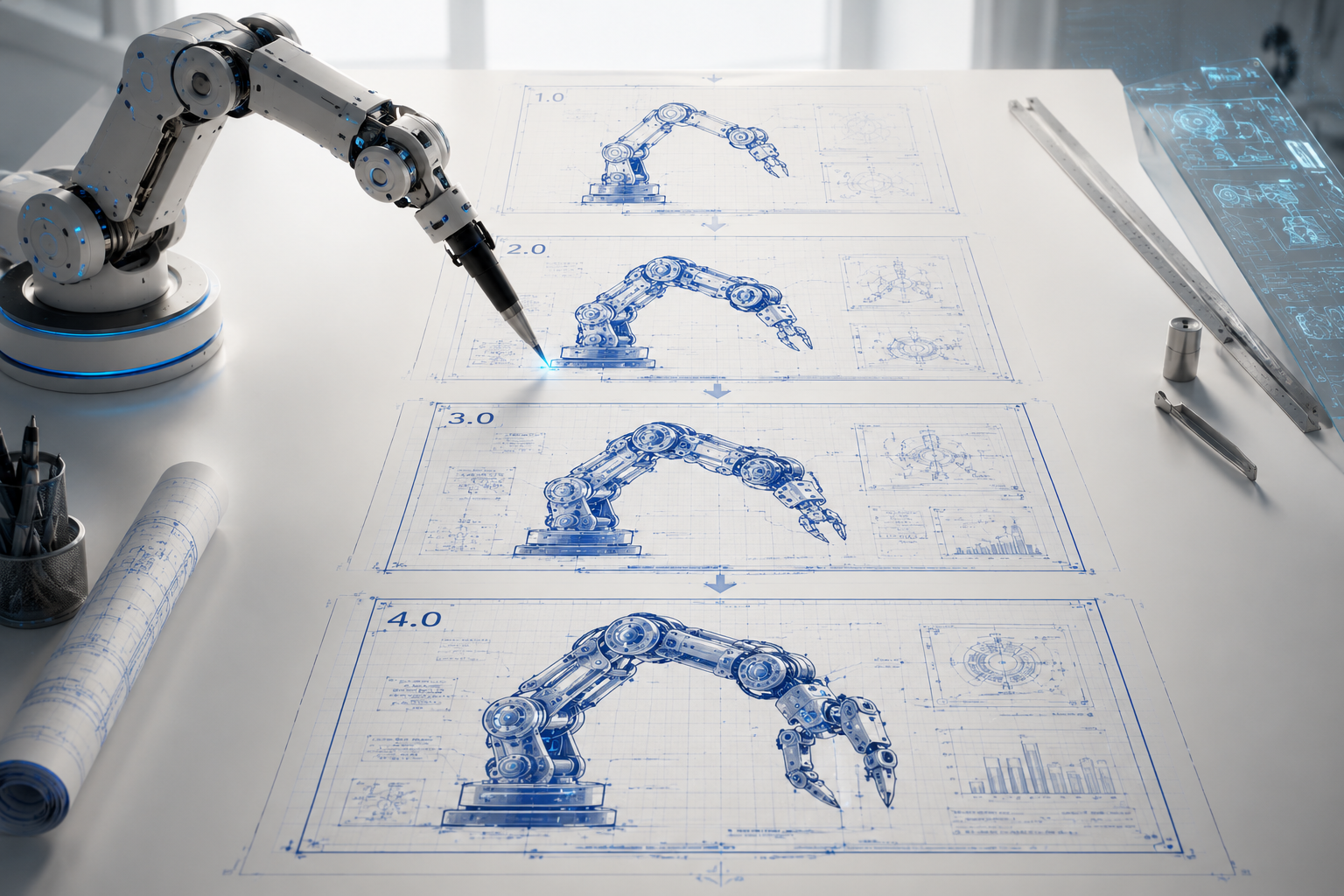
A concept known as recursive self-improvement (RSI) suggests we may be approaching a different kind of inflection point—one where AI begins helping build the next generation of AI.
At first glance, that sounds like science fiction.
It isn’t.
Anthropic recently reported that Claude now generates more than 80% of the code merged into its production systems. Whether that percentage rises or falls over time is less important than what it represents: AI is increasingly participating in the creation, testing, and improvement of the systems that power future AI development.
Think about that for a moment.
The biggest disruption may not be AI replacing individual tasks.
It may be AI accelerating the pace of its own improvement.
That distinction matters.
Most people still think of AI as a tool—a sophisticated one, but a tool nonetheless. We use it to summarize documents, generate content, write code, analyze data, and answer questions.
But what happens when the tool increasingly contributes to its own advancement?
What happens when each generation of AI helps accelerate the development of the next generation?
The conversation changes.
This is where the concept of compounding becomes particularly important.
Historically, technological progress has been limited by human capacity. Every major breakthrough required human researchers, engineers, scientists, and organizations to move the process forward.
But recursive self-improvement introduces the possibility of a new dynamic: technology helping accelerate the pace of technological advancement itself.
If that occurs at scale, progress may no longer be linear.
It may become increasingly exponential.
That possibility creates enormous opportunity.
Medical breakthroughs could accelerate.
Scientific discovery could move faster.
Productivity gains could reshape industries.
Complex problems that currently take years to solve could potentially be addressed in months.
The upside is difficult to overstate.
But neither are the risks.
A technology capable of compounding its own capabilities raises important questions about governance, accountability, and oversight.
How do we ensure that safety advances keep pace with capability advances?
How do institutions govern systems that may evolve faster than traditional regulatory frameworks?
How do policymakers balance innovation with responsibility?
And perhaps most importantly, who is accountable when increasingly autonomous systems contribute to decisions, outcomes, or unintended consequences?
These questions do not argue against innovation.
Innovation matters.
In fact, innovation has historically been one of humanity’s most powerful forces for improving quality of life.
But innovation without guardrails can create consequences that are difficult to predict and even harder to reverse.
That is why the conversation around AI can no longer focus solely on what AI can do today.
We must also consider what AI may become tomorrow.
The question is no longer whether AI will continue to improve.
The question is whether our policies, institutions, and governance frameworks can keep pace if AI begins accelerating its own improvement.
Because if recursive self-improvement becomes a defining feature of the next era of artificial intelligence, we may discover that the most transformative aspect of AI was never its ability to perform tasks.
It was its ability to accelerate the pace of its own evolution.
And that changes everything.